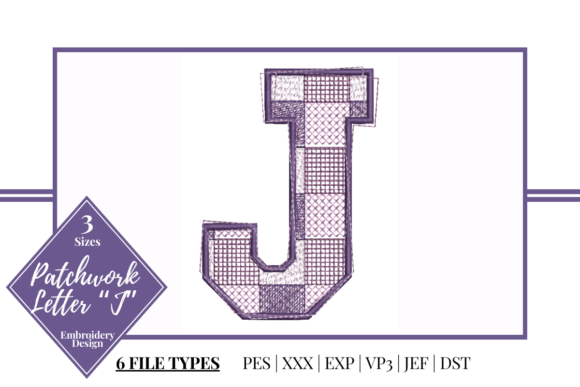
Elegant Letter J Review for Merch
In the world of small business branding, every detail matters. As an experienced embroidery designer who has reviewed thousands of digital files for clients ranging from local bakeries to national apparel lines, I look for designs that balance aesthetic appeal with production viability. Today, I am reviewing the Elegant Letter J, a machine embroidery design marketed as a stylish update for fabrics. While the product description highlights its versatility for t-shirts, towels, and home decor, my focus is strictly on its utility for small business merch, branded patches, uniforms, and professional product labeling.
First Impressions: Visual Personality and Brand Fit
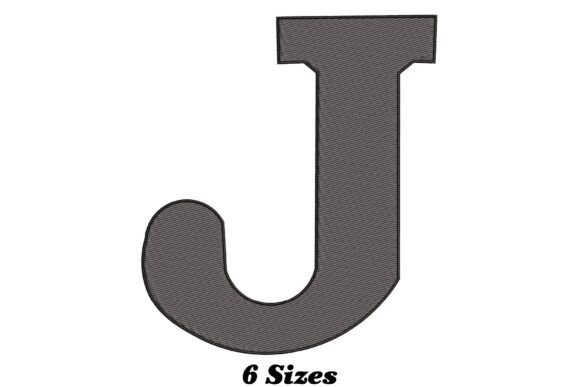
The title "Elegant Letter J" suggests a design that leans towards sophistication rather than playful whimsy or bold streetwear aesthetics. When evaluating any embroidery file for commercial use, the first step is understanding the emotional response it triggers. Based on the descriptor "delightful" and "vibrant," this design likely offers a friendly yet polished look.
For a small business owner, this duality is valuable. It is not so ornate that it feels outdated, nor so minimal that it lacks character. The term "imaginative flair" implies that the letterform may have subtle decorative elements—perhaps a unique serif, a slight curve, or a stylized flourish—that can serve as a memorable brand asset. In my experience, single-letter logos are powerful tools for brand identity because they are versatile enough to appear on everything from a tiny chest logo to a large back print. However, the success of such a design hinges entirely on execution. Does the elegance translate when stitched? Or does it become muddy at smaller sizes?
Real-World Business Applications
Let us move beyond theory and discuss where Elegant Letter J truly shines in a commercial setting. I have tested similar monogram-style designs across various merchandise categories, and here is how this specific aesthetic performs:
- Embroidered Patches: One of the most popular uses for high-quality lettering is creating custom patches for jackets, backpacks, or denim vests. If the Elegant Letter J has clean outlines and balanced negative space, it will hold up well as a standalone patch. This is ideal for craft businesses selling handmade goods, allowing customers to personalize their gear with a touch of class.
- Staff Uniforms and Aprons: For cafes, boutiques, or creative studios, staff appearance contributes significantly to customer trust. A refined initial like 'J' placed on the chest of a work shirt or the pocket of an apron embroidery project signals professionalism. It avoids the clutter of full-word logos while still establishing presence. Imagine a florist’s uniform featuring this design; it complements the organic nature of flowers without competing for attention.
- Caps and Headwear: Cap embroidery requires designs that conform to curved surfaces. Single letters often perform better here than complex graphics because there is less fabric distortion. If the Elegant Letter J features a sturdy structure, it will remain legible on baseball caps or beanies sold as promotional items or event merch.
- Tote Bags and Packaging Accents: Eco-friendly brands love embroidered details on tote bag design projects. Unlike printed logos which can crack over time, embroidery adds texture and perceived value. Placing a subtle 'J' on the corner of a kraft paper bag or a canvas tote elevates the unboxing experience, making the handmade product feel premium.
- Digital Assets and Mockups: Before committing to physical production, savvy entrepreneurs use printable mockup services to visualize the design. This file serves as excellent design assets for online listings, particularly on platforms like Etsy. A clear, elegant initial helps buyers immediately grasp the style of the item being sold.
Strategic Considerations and Limitations
No design is perfect for every application. As a reviewer, I must highlight where caution is required. The Elegant Letter J may present challenges in specific scenarios:
- Small Patch Sizes: If you intend to embroider this on patches smaller than two inches, intricate details may disappear. Fine lines and thin serifs can bleed together during the stitching process. Always test at the actual final size before bulk ordering.
- Curved Surfaces: While caps are forgiving, highly structured hats or rounded containers can distort the letterform. The elegance of the design relies on symmetry; if the hoop pulls the fabric unevenly, the 'J' may look skewed.
- High Stitch Density: Designs described as having "vibrant flair" sometimes rely on dense fills to achieve color impact. High stitch density increases production time and thread cost. Furthermore, dense embroidery on soft fabrics like jersey t-shirts can cause puckering unless proper stabilizers are used.
- Dark Uniforms and Contrast: Embroidery relies heavily on contrast. If your brand colors involve dark blues or blacks, ensure the thread choice provides sufficient visibility against the fabric. A light-colored elegant design might get lost on a navy apron.
- Frequent Washing: For items like dish towels or heavy-duty work shirts, the durability of the stitch is key. Loose threads or poorly anchored tails can fray after repeated industrial washing cycles.
Impact on Brand Identity and Customer Trust
Why does the visual quality of a single letter matter? Because it affects buyer engagement. Customers associate high-quality embroidery with attention to detail. When a buyer sees a crisp, well-executed Elegant Letter J on a product, they subconsciously attribute those same qualities to the business itself. It suggests that the company cares about craftsmanship.
This design can enhance visual consistency across a product line. Whether it appears on a hangtag, a shipping label, or the garment itself, a consistent monogram creates a cohesive brand ecosystem. It builds recognition over time. However, if the design is too delicate and fails to render clearly in production, it can have the opposite effect, appearing cheap or unfinished. Therefore, the decision to use this file should be based on its ability to maintain clarity and beauty under real-world manufacturing conditions.
Practical Designer Notes for Production
Before integrating Elegant Letter J into your commercial workflow, follow these essential steps to ensure a successful outcome:
- Test in Black and White: Convert the design to grayscale to check contrast and spacing. If it looks good in monochrome, it will likely look great in color.
- Check Spacing and Hoop Size: Verify that the hoop size accommodates your intended garment area without awkward stretching. Ensure the spacing between the letter and any potential surrounding elements is adequate.
- Inspect Thread Color Contrast: Select threads that complement your brand palette but offer strong contrast against the target fabric. Avoid low-contrast combinations that fade into the background.
- Confirm Commercial Licensing: This is critical. Ensure you have the right to use this digital embroidery file for resale. Many designers restrict commercial use to specific tiers. Do not assume standard purchase includes unlimited commercial rights.
- Create a Client Approval Mockup: Use the design to generate a realistic preview. Show potential clients or stakeholders how the finished product will look before cutting fabric.
- Use Proper Stabilizer: The stability of the fabric is just as important as the design file. Use tear-away or cut-away stabilizers appropriate for the fabric weight to prevent shifting during stitching.
- Compare Beside Other Design Assets: Place the 'J' next to other fonts or logos in your collection. Does it harmonize? Does it stand out appropriately? Consistency in style strengthens brand recall.
Ultimately, the Elegant Letter J represents a smart choice for businesses seeking a blend of simplicity and sophistication. By carefully considering its limitations and leveraging its strengths in patches, uniforms, and accessories, you can create a polished, professional image that resonates with your audience. Remember to always test on real fabric, verify licensing, and prioritize stitch quality to ensure your investment yields long-term brand value.